
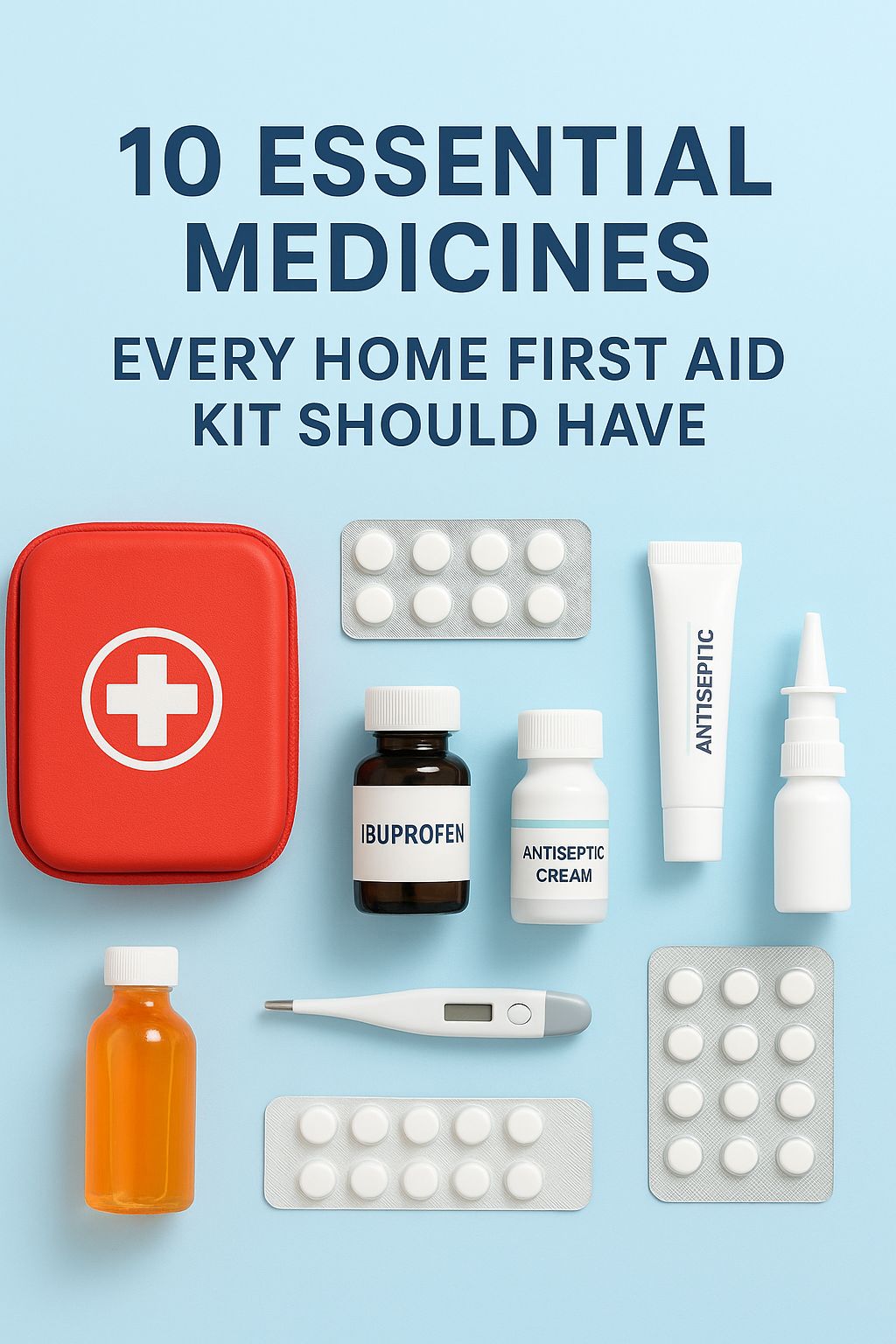
10 Essential Medicines Every Home First Aid Kit Should Have
A well-stocked first aid kit is a must for every household. While bandages and antiseptics are important, having the right medicines on hand can make a big difference in handling minor injuries and common ailments quickly and effectively. Below are ten essential medicines you should always keep in your home first aid kit.
1. Paracetamol (Acetaminophen)
Use: Relief from headaches, fevers, muscle aches, and mild pain.
Why important: Safe for both adults and children (with proper dosing) and is one of the most commonly used pain relievers.
2. Ibuprofen
Use: Reduces inflammation, fever, and pain caused by conditions like toothache, muscle strain, or menstrual cramps.
Note: Not suitable for people with stomach ulcers, kidney issues, or certain allergies.
3. Antihistamines
Use: For allergic reactions, hay fever, runny nose, insect bites, or skin irritations.
Common options: Loratadine or cetirizine (non-drowsy), diphenhydramine (can cause drowsiness).
4. Antacid Tablets
Use: Provides quick relief from indigestion, acidity, and heartburn after eating spicy or heavy meals.
Forms: Tablets, chewables, or liquid suspensions.
5. Oral Rehydration Salts (ORS)
Use: Restores electrolytes lost due to diarrhea, vomiting, or heat exhaustion.
Why important: Prevents dehydration, especially in children and the elderly.
6. Antiseptic Cream or Ointment
Use: Prevents infection in minor cuts, burns, scrapes, or insect bites.
Examples: Neomycin, Bacitracin, or iodine-based creams.
7. Cough Syrup or Lozenges
Use: Provides relief from sore throats, irritation, and dry coughs.
Tip: Keep both adult and child-friendly syrups in your kit.
8. Loperamide (Anti-Diarrheal)
Use: Helps control sudden diarrhea by slowing down bowel movements.
Note: Not for long-term use, and should not replace medical treatment for persistent symptoms.
9. Hydrocortisone Cream
Use: Reduces itching, redness, and swelling from skin conditions like rashes, eczema, or insect bites.
Strength: Usually available in mild 1% over-the-counter formulations.
10. Anti-nausea Medication
Use: For motion sickness, nausea, or mild vomiting.
Options: Meclizine, dimenhydrinate, or ginger-based natural remedies.
-
Check expiry dates regularly and replace medicines as needed.
-
Store your kit in a cool, dry place out of reach of children.
-
Label medicines clearly and include basic instructions for use.
-
Add tools like a thermometer, tweezers, and bandages to make your kit complete.
Conclusion
Having these ten essential medicines in your home first aid kit ensures you are prepared for most minor health issues. Remember, these are for short-term, minor ailments, and you should always consult a healthcare professional for serious or persistent symptoms.
Stay safe, stay prepared, and keep your family protected!